Engineering Insights

Transformer Technical Blog & Knowledge Hub

Expert articles, design standards, and technical guides on VPI, Cast Resin, Power, and Distribution Transformers.

IEC 60076 | IS 2026

Standard Compliance & Performance

Learn how our type-tested transformers deliver high efficiency and safety across industrial grid networks.

Dry Type Technologies

VPI & Cast Resin Dry Transformers

Best practices for selection, installation, and operation of fire-safe, maintenance-free transformers.

0%

Choosing among the top Vacuum Pressure Impregnated Transformer manufacturers requires more than comparing catalog ratings. It requires field judgment. A reliable unit must withstand heat, vibration, moisture, and repeated electrical stress. Its resin system should penetrate winding spaces evenly. Its insulation should remain stable after years of thermal cycling.

Dr. Thomas A. Prevost, a recognized transformer diagnostics specialist, has said, “Transformer reliability depends on understanding how insulation behaves throughout its service life.” That principle guides this overview. Manufacturer reputation matters, but it never tells the whole story. Factory testing, resin quality, winding design, curing control, and after-sales support deserve equal attention. A polished brochure cannot replace verified test records.

Look closely at practical details. Ask whether the supplier performs partial-discharge testing. Check how it controls voids around conductors. Examine temperature-rise data, enclosure protection, and documented standards compliance. Site conditions also matter. A transformer installed beside a dusty production line faces different risks from one serving a clean commercial building.

The strongest manufacturers combine engineering depth with consistent production discipline. Some are excellent in custom industrial systems. Others offer stronger global service networks. A few appear impressive but provide limited technical evidence. That should raise questions.

This guide compares leading manufacturers through performance, application experience, quality systems, and customer support. The assessment is not perfect. Real-world reliability can vary between factories, projects, and operating environments. Readers should verify current certifications, references, and test documentation before making a purchase.
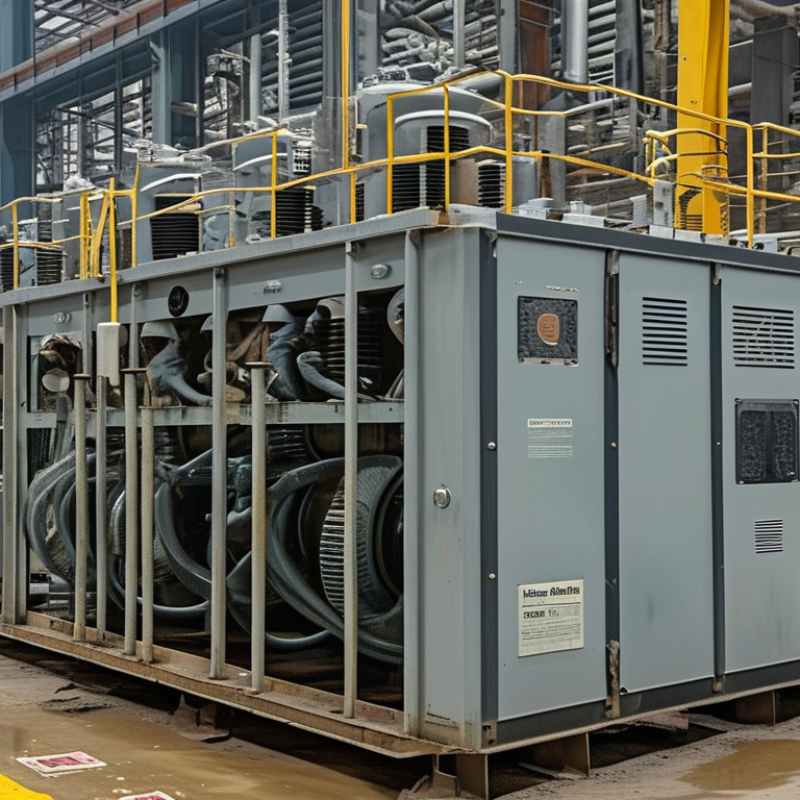
Top Vacuum Pressure Impregnated Transformer Manufacturers?

VPI Transformers Defined: 50/60 Hz Ratings and IEC 60076-11 Standards

VPI transformers are dry-type units whose windings receive resin under vacuum, then pressure. This process fills air gaps and improves mechanical stability. IEC 60076-11 defines requirements for dry-type transformers, including insulation, temperature rise, environmental conditions, and fire behavior. It does not approve a manufacturer automatically. Buyers should request routine and type-test evidence.

Frequency matters. Transformer flux follows the volts-per-hertz relationship. A 60 Hz transformer operated at 50 Hz, with unchanged voltage, can experience about 20% higher magnetic flux. That may increase heating, noise, and saturation risk.

Manufacturers should state separate 50 Hz and 60 Hz ratings, tap limits, impedance, and cooling assumptions. Small details matter here.

The International Energy Agency’s Electricity Grids and Secure Energy Transitions report estimates annual grid investment must exceed 600 billion dollars by 2030, roughly double current levels. This expansion increases demand for dependable medium-voltage equipment. The U.S. Department of Energy has also estimated that transformer losses consume tens of billions of kilowatt-hours annually in the United States. Efficient design therefore affects operating cost, not only purchase price. In practice, I would compare thermal aging data, partial-discharge results, acoustic measurements, and moisture protection. A brochure is not enough. Field conditions remain less predictable than laboratory tests. Dust, repeated loading, and imperfect installation can expose weaknesses that certificates do not show.

VPI Manufacturing Steps: Vacuum, Pressure, Epoxy Resin, and Class F/H Insulation

Top Vacuum Pressure Impregnated Transformer Manufacturers?
A reliable VPI manufacturer controls moisture, resin viscosity, vacuum depth, and curing temperature. These details shape insulation life. The process begins after coils are dried inside a heated chamber. Dry cores matter. A deep vacuum removes trapped air and residual moisture from conductor layers. According to the U.S. Department of Energy’s Distribution Transformers Technical Support Document, transformers consume about 2.5% of total U.S. electricity. Lowering insulation defects and losses therefore has practical value.
During pressure impregnation, epoxy resin enters small gaps around windings. Controlled pressure improves penetration and reduces air pockets. Operators then drain excess resin before curing the coil in an oven. Temperature records, resin batch data, and pressure curves should remain traceable. IEC 60076-11 defines requirements for dry-type transformers, while IEC 60085 identifies Class F insulation at 155°C and Class H insulation at 180°C. These ratings describe thermal capability, not permission to ignore cooling design.
Experienced factories test partial discharge, insulation resistance, turns ratio, and dielectric strength. Visual inspection still matters. A small void can become a serious failure point under repeated thermal cycling. The process is not flawless. Resin may cure unevenly if the coil temperature is misread. That is why qualified manufacturers combine automated records with skilled inspection, rather than trusting one test result. A credible supplier should also provide test reports, curing profiles, and clear evidence of compliance with applicable standards.

Top VPI Manufacturers: IEC 60076-11, IEEE C57.12.01, and ISO 9001 Compliance

Top Vacuum Pressure Impregnated Transformer Manufacturers?

Leading VPI manufacturers prove compliance through repeatable production controls, not attractive brochures. IEC 60076-11 defines requirements for dry-type transformers, including insulation systems, temperature rise, dielectric tests, and environmental performance. IEEE C57.12.01 adds North American design and testing expectations. A credible factory should provide routine test records, type-test evidence, winding resistance results, and traceable material certificates.

The U.S. Department of Energy reported that about 70% of large power transformers were over 25 years old. This figure does not describe VPI units directly, but it shows why thermal endurance and maintenance planning matter. Buyers should inspect resin penetration, curing temperature, coil support, and partial-discharge results. Small gaps can become expensive failures. They sometimes do.

ISO 9001 certification strengthens the manufacturing system, but it does not replace transformer testing. The ISO Survey 2022 recorded more than 1.26 million ISO 9001 certificates worldwide, showing its broad adoption. Yet certification alone cannot prove winding quality. Ask for calibration records, nonconformance actions, batch traceability, and evidence from independent laboratories. Site audits remain valuable. I have found that documentation is often excellent, while practical assembly details receive less attention. That weakness deserves scrutiny before approval.

Manufacturer Comparison: Voltage Classes, MVA Capacity, and Partial-Discharge Limits

Top Vacuum Pressure Impregnated Transformer Manufacturers?

Comparing vacuum pressure impregnated transformer manufacturers requires more than checking catalog capacity. IEC 60076-11 classifies dry-type transformers by insulation system, thermal behavior, and environmental performance. Common medium-voltage offerings cover 3.3, 6.6, 11, and 15 kV. Some designs extend toward 24 or 36 kV. The voltage class changes creepage distance, testing cost, and enclosure size. It also affects installation clearance. A 1 MVA unit may fit a compact indoor room, while a 10 MVA unit can require reinforced floors, forced-air cooling, and wider cable bays.

Capacity claims need careful reading. VPI transformers commonly serve industrial and commercial systems from several hundred kVA to roughly 10–15 MVA, although project limits vary. IEEE C57.12.01 and IEC 60076-11 provide the technical framework, but neither standard makes every manufacturer’s design directly comparable. Cooling method matters. A 5 MVA AN transformer is not equivalent to a 5 MVA AF transformer. The gap matters.

Partial discharge is often the sharper quality indicator. IEC 60076-11 testing commonly uses a 10 pC acceptance level for applicable dry-type designs, measured under specified voltage and circuit conditions. CIGRE reliability guidance also stresses that test setup, noise rejection, and factory records influence interpretation. A low number is useful, not magical. Buyers should request the test voltage, calibration method, background noise, and trend data. One uncomfortable point remains: published MVA and PD figures may look precise, yet site humidity, dust, ventilation, and cable stress can change field performance. Manufacturer comparisons should therefore examine witnessed tests, temperature-rise data, and service references—not attractive tables alone.

Top Vacuum Pressure Impregnated Transformer Manufacturers? - Manufacturer Comparison: Voltage Classes, MVA Capacity, and Partial-Discharge Limits
Anonymous Manufacturer Profile Typical VPI Product Type Common Voltage Classes Typical Capacity Range Typical HV Insulation Level Partial-Discharge Acceptance Target Applicable Standards Typical Cooling / Enclosure Best-Fit Applications
Profile A Low-voltage and medium-voltage VPI dry-type transformer 0.4 kV, 3.3 kV, 6.6 kV, 11 kV 100 kVA–5 MVA Up to 12 kV system voltage; commonly 28/75 kV or 28/95 kV basic insulation level ≤10 pC at the specified test voltage; ≤5 pC available by project specification IEC 60076-11; IEC 60076-3; IEEE C57.12.01 AN or AN/AF; indoor ventilated enclosure or IP23 enclosure Commercial buildings, industrial plants, renewable-energy auxiliaries
Profile B Medium-voltage VPI distribution transformer 6.6 kV, 11 kV, 13.8 kV, 15 kV 500 kVA–10 MVA Up to 17.5 kV system voltage; commonly 38/95 kV or 38/110 kV basic insulation level ≤10 pC at 1.3 times the phase-to-earth test voltage; ≤5 pC for low-noise projects IEC 60076-11; IEC 60076-3; IEC 60076-1 AN/AF, with optional forced-air fans; indoor or outdoor kiosk installation Factories, data centers, transportation infrastructure, utility substations
Profile C High-voltage VPI dry-type power transformer 11 kV, 13.8 kV, 22 kV, 24 kV 2.5–15 MVA Up to 24 kV system voltage; commonly 50/125 kV or 50/150 kV basic insulation level ≤10 pC at the contractual test voltage; ≤5 pC when specified for critical installations IEC 60076-11; IEC 60076-3; IEEE C57.12.01; IEEE C57.12.91 AN/AF; segregated enclosure, temperature monitoring, and optional IP31–IP54 protection Medium-voltage substations, mining, marine facilities, large industrial loads
Profile D High-capacity VPI furnace, rectifier, or utility auxiliary transformer 11 kV, 13.8 kV, 22 kV, 33 kV 5–25 MVA, subject to site conditions and thermal design Up to 36 kV system voltage; commonly 70/170 kV or 70/200 kV basic insulation level ≤10 pC at the specified acceptance voltage; project limits of ≤5 pC may be imposed IEC 60076-11; IEC 60076-3; IEC 60076-5; IEEE C57.12.01 AN/AF or AF/AF; dedicated cooling ducts, outdoor enclosure, and online temperature sensors Heavy industry, rail traction, renewable-energy collection systems, utility service
Profile E Low-noise, low-partial-discharge VPI transformer for critical power 3.3 kV, 6.6 kV, 11 kV, 13.8 kV 1–12.5 MVA Up to 17.5 kV system voltage; insulation level selected according to system coordination study ≤5 pC contractual limit; factory routine and type-test procedures defined in the purchase specification IEC 60076-11; IEC 60076-3; IEC 60270; IEEE C57.12.01 AN/AF; vibration-isolated frame, acoustic treatment, and shielded test arrangement Data centers, hospitals, laboratories, semiconductor and other sensitive facilities
Technical note: Voltage classes, MVA ratings, insulation levels, and partial-discharge limits are project-dependent. IEC 60076-11 does not make one universal partial-discharge value applicable to every VPI transformer; the purchaser should define the test voltage, measurement method, background-noise level, acceptance criterion, and applicable standard in the tender specification. The capacity ranges above represent technically common VPI dry-type configurations rather than guaranteed limits for every manufacturer.

How to Select VPI Suppliers: Efficiency, Temperature Rise, Testing, and Warranty Data

Selecting a vacuum pressure impregnated transformer supplier requires more than comparing purchase prices. The U.S. Department of Energy’s Distribution Transformer Technical Support Document separates no-load losses from load losses, showing why efficiency must be checked across the operating profile. Ask for guaranteed watts at no load, rated load, and partial load. A low-loss core may matter more than impressive brochure percentages.

Temperature rise deserves equal attention. IEC 60076-11 defines requirements for dry-type transformers, while IEEE C57.12.01 supports insulation and thermal performance evaluation. Request the declared temperature-rise class, ambient assumptions, altitude correction, and cooling method. A 100 K rise can behave differently in a dusty plant at 40°C ambient. Small detail. It changes service life.

Testing should include winding resistance, turns ratio, impedance, load loss, no-load loss, applied-voltage, and induced-voltage tests. These checks align with routine practices in IEC 60076-1. Require signed factory reports, calibration dates, and traceable instruments. A warranty should state coverage duration, response time, exclusions, and remedy costs. Many buyers overlook transport damage and repeated-tripping conditions. That is risky. Review actual failure statistics, field references, and corrective-action records, not only certificates. A supplier with clear data may still reveal gaps; that honesty is useful.

FAQS

What is a VPI transformer?

It is a dry-type transformer with windings impregnated by resin under vacuum and pressure. The resin fills small air gaps. This improves mechanical stability and insulation consistency.

Why do 50 Hz and 60 Hz ratings matter?

Transformer flux follows the volts-per-hertz relationship. A 60 Hz unit at 50 Hz may experience about 20% higher flux. That can increase heat, noise, and saturation risk. Always verify separate frequency ratings.

Can one transformer operate safely at both frequencies?

Sometimes, but not automatically. Check voltage, frequency, tap limits, impedance, and cooling assumptions. A suitable rating should appear in the technical documents. Guessing here is risky.

How is a VPI winding manufactured?

Coils are dried in a heated chamber before impregnation. Vacuum removes trapped air and residual moisture. Pressure then drives epoxy resin into conductor gaps. The coil is drained and oven-cured.

Which production records should a buyer request?

Request vacuum depth, pressure curves, resin batch details, and curing temperatures. Temperature records should match the actual coil. A single missing record may not prove failure. Still, it deserves questions.

What do Class F and Class H insulation ratings mean?

Class F indicates a thermal capability of 155°C. Class H indicates a thermal capability of 180°C. These ratings do not replace proper cooling design. Hotter is not always better.

How should VPI transformer capacity be compared?

Compare voltage class, MVA capacity, cooling method, and installation conditions. Typical medium-voltage levels include 3.3, 6.6, 11, and 15 kV. A 5 MVA natural-air unit differs from a forced-air unit. The numbers can look deceptively similar.

What partial-discharge information should a buyer review?

Request the test voltage, calibration method, background noise, and trend data. Applicable dry-type designs commonly use a 10 pC acceptance level. A low reading is helpful, but not magical. Field humidity and cable stress can change performance.

Which tests and documents help evaluate a supplier?

Review partial-discharge, insulation-resistance, turns-ratio, dielectric-strength, and temperature-rise results. Request routine-test and type-test evidence under the applicable standard. Also inspect moisture protection and service references. Laboratory results are not the whole story.

Why do installation conditions affect transformer reliability?

Dust, humidity, repeated loading, poor ventilation, and imperfect installation can expose hidden weaknesses. A small resin void may worsen during repeated thermal cycling. No certificate predicts every site condition. That limitation deserves honest attention.

Conclusion

A Vacuum Pressure Impregnated Transformer is a dry-type transformer designed for reliable power distribution in commercial, industrial, and infrastructure applications. Its windings are treated under vacuum and pressure with epoxy resin, creating a strong, moisture-resistant insulation system. Available for 50/60 Hz operation, these transformers commonly use Class F or Class H insulation and are evaluated according to IEC 60076-11. The manufacturing process typically includes coil preparation, vacuum drying, resin impregnation, pressure curing, and comprehensive electrical and thermal testing.

When comparing manufacturers, buyers should review compliance with IEC 60076-11, IEEE C57.12.01, and ISO 9001, along with voltage classes, MVA capacity, temperature-rise performance, efficiency, and partial-discharge limits. Supplier selection should also consider factory testing procedures, documented quality control, service support, delivery capability, and warranty terms. A dependable supplier should provide clear technical data, verified test results, and a transformer design suited to the installation environment and long-term operating requirements.

Evelyn

Evelyn

Evelyn is a professional marketing specialist dedicated to helping businesses understand products, communicate value, and build lasting relationships with their audiences. With extensive knowledge of the company’s solutions, Evelyn combines market research, customer insights, content strategy, and......